
Subjective Attributes
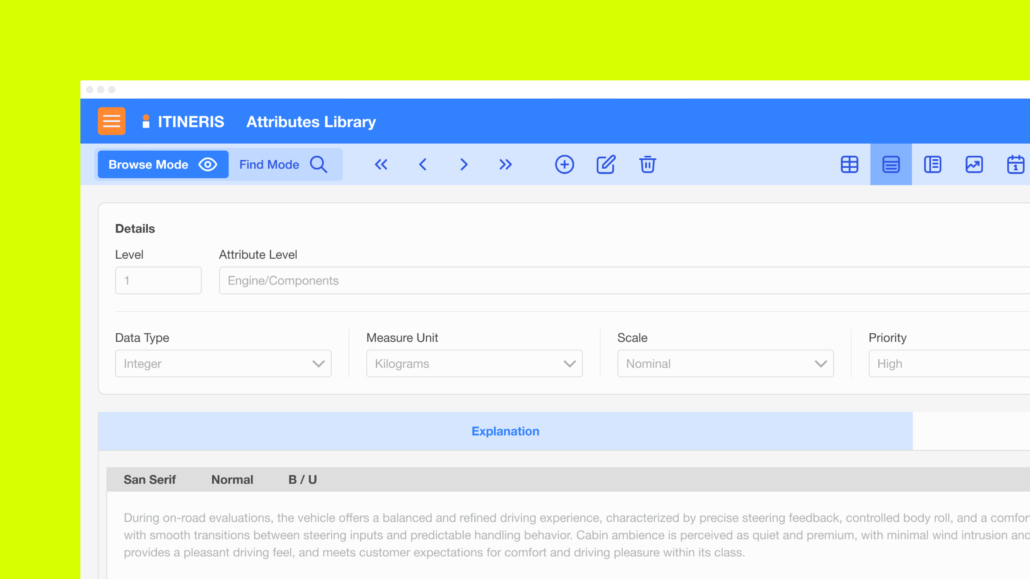
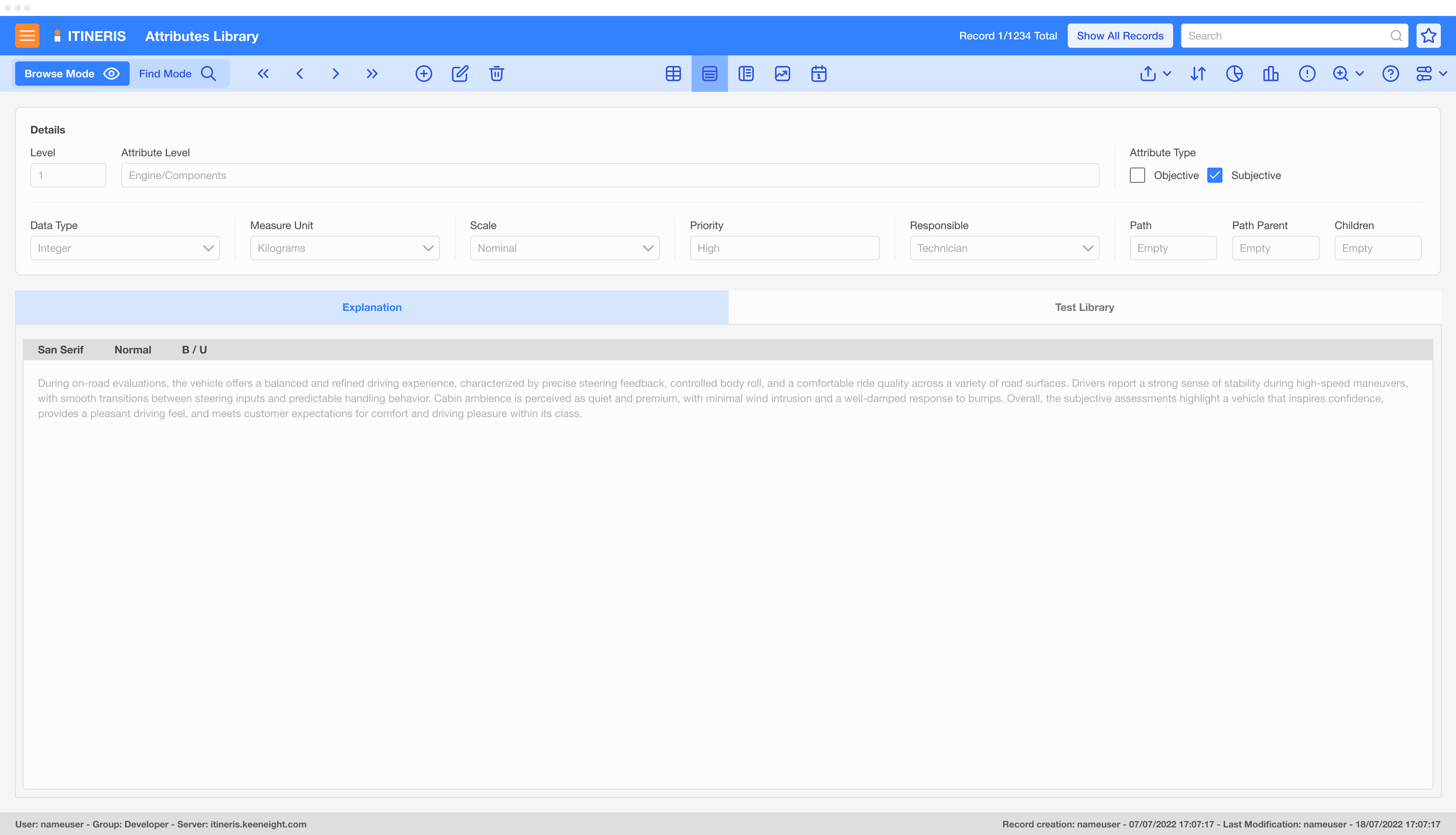
Subjective attributes represent the characteristics of a vehicle that are assessed through human perception, sensory feedback, and experiential input rather than quantitative measurements. These attributes, such as comfort, handling feel, interior ambiance, and sound quality, are critical to the user’s overall satisfaction and perception of quality. Although qualitative in nature, they play a vital role in ensuring that a vehicle meets customer expectations and stands out in the competitive market.
By focusing on subjective attributes, the Itineris platform ensures that vehicles not only perform well but also connect with customers on an emotional and sensory level, delivering products that exceed expectations and enhance brand loyalty.
Key Features
1. Perception-Based Assessment:
- Subjective attributes are evaluated through sensory experiences, such as:
- Ride Comfort: Evaluated based on smoothness and suspension performance.
- Steering Feel: Assessed for responsiveness and precision during maneuvers.
- Cabin Noise Levels: Perceived quietness or sound quality of the interior.
- Aesthetic Appeal: Judged by the design, fit, finish, and material quality of the interior and exterior.
2. Dynamic Testing:
- These attributes are often assessed in real-world conditions, such as test tracks, on-road evaluations, or controlled environments, to gather authentic feedback.
3. Integration with Itineris Modules:
- Target Settings Module: Subjective attributes are defined as key objectives that align with brand identity and customer expectations.
- Test Library: Includes tests designed to evaluate and refine subjective attributes, ensuring consistency in assessment.
- DVP (Design Verification Plan): Subjective attributes are validated alongside objective attributes during the DVP process, ensuring both qualitative and quantitative goals are met.
- Issue Tracker: Logs deviations in subjective performance, allowing teams to track and resolve perception-related issues systematically.
4. Validation Through Quality Profiles:
- The Quality Profiles module in Itineris provides a structured framework for evaluating subjective attributes.
- Feedback from drivers, engineers, and customers is normalized into measurable scores using predefined rating scales and criteria.
- Profiles can be tailored to different evaluator types, such as professional test drivers, regular customers, or media representatives, ensuring a balanced evaluation.
5. Data Normalization and Weighting:
- Scores for subjective attributes are normalized into quantitative data, enabling their integration into KPI dashboards.
- Evaluations can be weighted based on the evaluator’s expertise or relevance. For example, scores from professional drivers might carry more weight than those from casual users.
6. Customer-Centric Focus:
- Subjective attributes are key to aligning vehicle design with customer desires, creating products that resonate emotionally and functionally with the target audience.

Benefits
- Enhanced User Experience: Focuses on attributes that directly impact the customer’s perception of quality, satisfaction, and brand loyalty.
- Differentiation in the Market: Subjective attributes often define a vehicle’s unique character, setting it apart from competitors.
- Informed Decision-Making: Data-driven evaluation of subjective feedback helps refine designs and address customer concerns effectively.
- Consistency in Evaluation: Structured testing frameworks ensure that subjective attributes are assessed systematically across projects and models.
- Integration Across Development: Links with Itineris modules ensure that subjective attributes are embedded in the overall development workflow, from target setting to validation.
- Balanced Product Development: Combines subjective and objective attributes for a holistic approach to vehicle quality and performance.
Applications
- Ride and Handling Evaluation: Ensures that the driving feel aligns with brand positioning, such as sportiness or comfort.
- Interior Design Assessment: Judges the tactile feel, aesthetic harmony, and material quality of the cabin.
- NVH (Noise, Vibration, and Harshness): Balances the soundscape and vibration feedback to create a pleasant driving environment.
- Customer and Media Testing: Gathers real-world feedback from end-users and media professionals for iterative refinement.
Example Scenario:
During the development of a premium sedan, engineers define a smooth ride and quiet cabin as key subjective attributes. Using the Quality Profiles module, feedback from professional drivers and customer test groups is collected and normalized into scores. The results are integrated with the Target Settings Module to ensure these attributes align with brand expectations. Deviations logged in the Issue Tracker highlight areas for improvement, such as suspension tuning or interior soundproofing, ensuring the final product delivers an exceptional user experience.


