
PBS
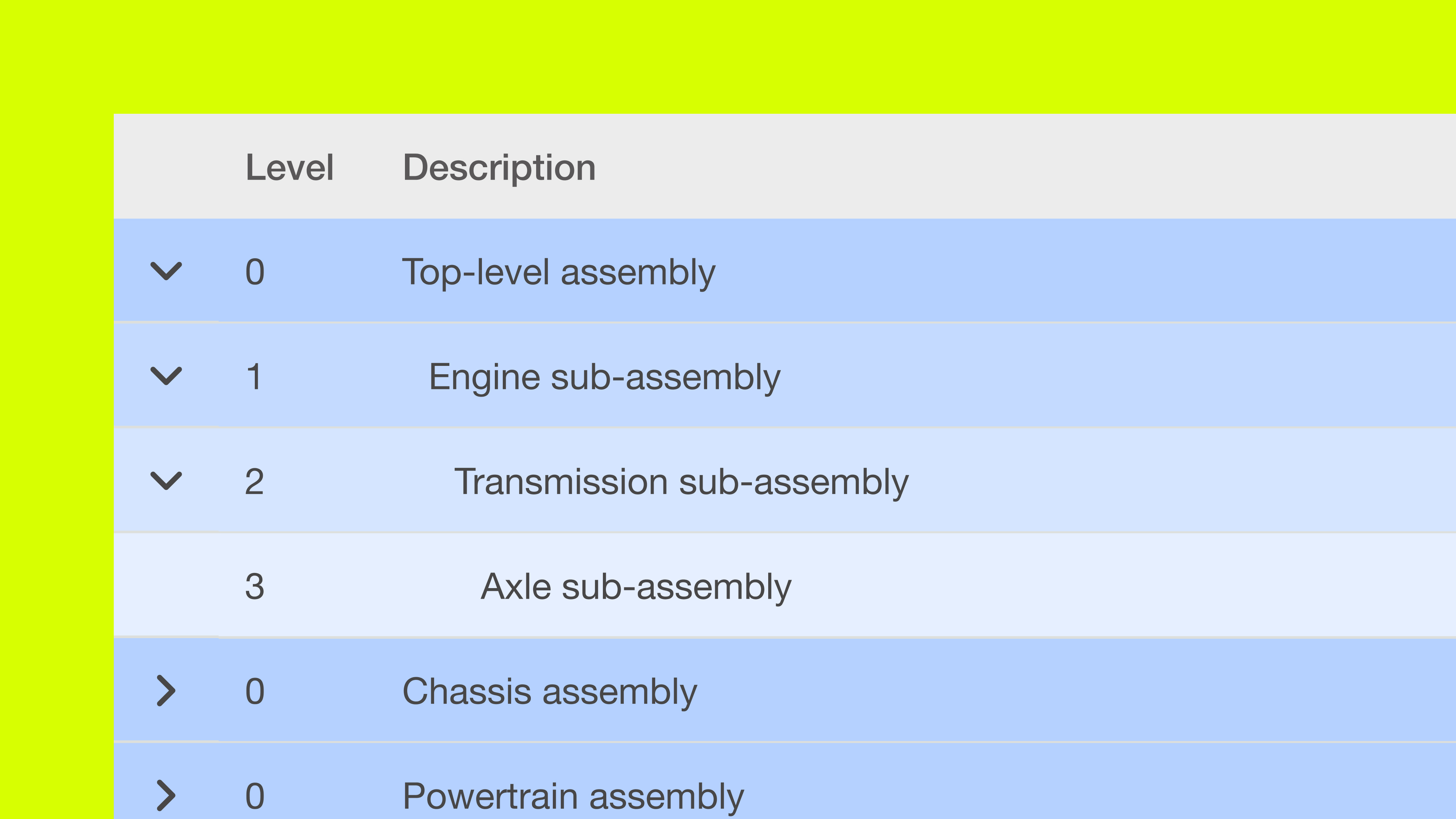
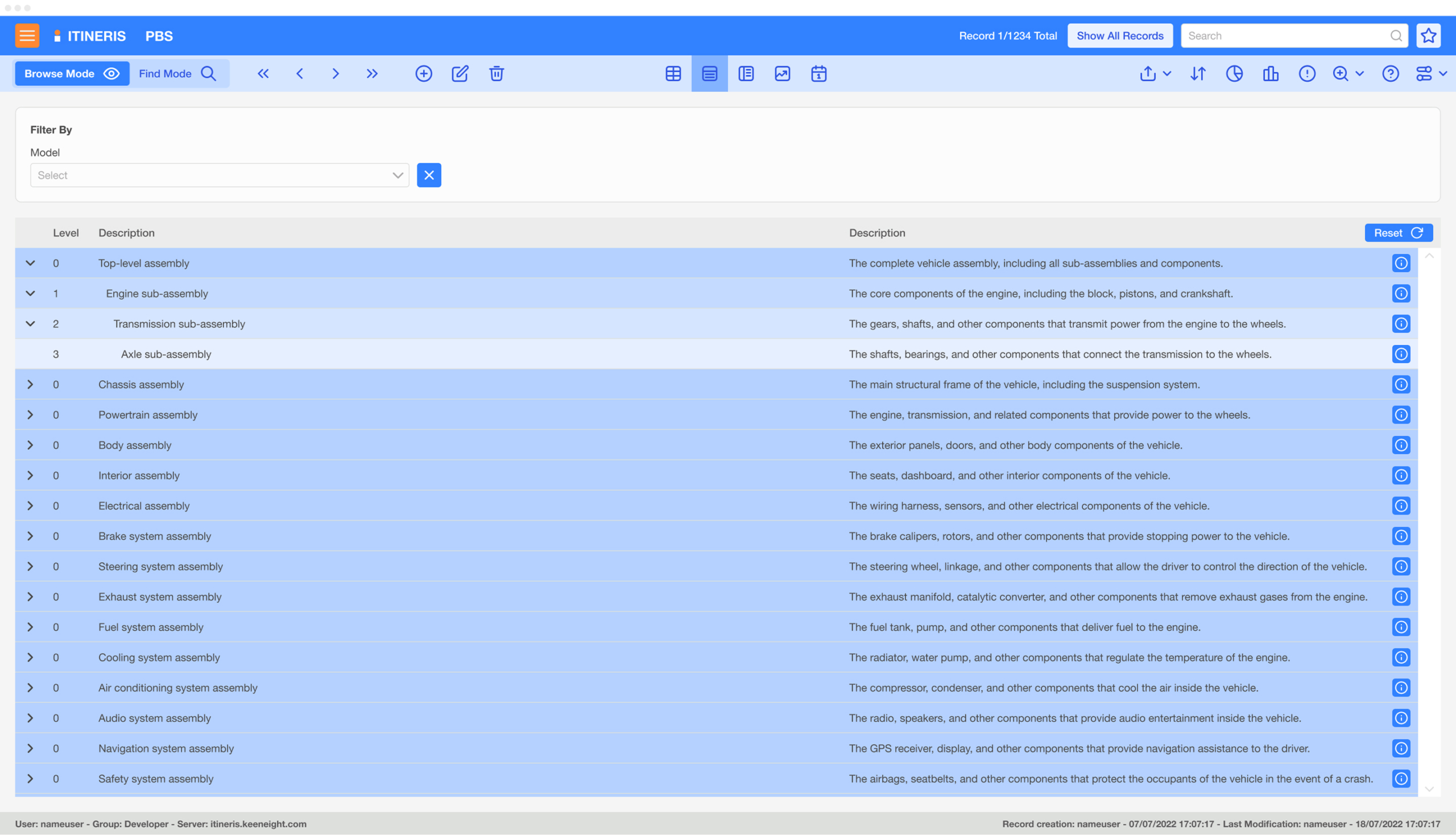
The Itineris Product Breakdown Structure (PBS) is a systematic and hierarchical framework that organizes a vehicle into its individual components, systems, and sub-systems. This structured approach provides a clear, top-down representation of the vehicle, starting with the entire product as the highest level and breaking it down progressively into detailed components. By mapping the vehicle in this way, PBS ensures that every part is accounted for, simplifying development, testing, and integration processes.
By integrating the PBS into the Itineris ecosystem, teams can manage the complexity of modern vehicle development with precision and efficiency, ensuring high-quality outcomes and streamlined operations.
Key Features
1. Hierarchical Organization:
- Top-Level: The entire vehicle is represented as the top-level product.
- Major Systems: Major systems such as powertrain, chassis, electrical systems, and body are the next level in the hierarchy.
- Sub-Systems: Each major system is further divided into sub-systems (e.g., the powertrain may include the engine, transmission, and driveline).
- Individual Components: At the lowest level, individual parts (e.g., bolts, sensors, and control units) are detailed.
2. Integration with Development Processes:
- The PBS connects directly to the Design Verification Plan (DVP) to ensure all components and systems are properly tested.
- It supports Test Library creation by providing a clear mapping of what needs to be tested and how these tests relate to the overall vehicle architecture.
3. Traceability:
- Every component, system, and sub-system in the PBS is traceable throughout the development lifecycle.
- This ensures that all elements are considered during design, validation, and production, reducing the risk of oversight.
4. Fatigue and Lifecycle Monitoring:
- The PBS supports tracking fatigue levels and lifecycle performance for individual components.
- Engineers can assess how specific parts contribute to system durability and overall vehicle reliability.
5. Cross-Functional Collaboration:
- The PBS structure enhances communication among engineering, design, and project management teams.
- Teams can work with a shared understanding of the vehicle’s breakdown, aligning efforts and reducing duplication.
6. Resource Planning and Allocation:
- By mapping the vehicle in detail, the PBS helps allocate resources effectively, ensuring that each component and system receives adequate attention during development and testing.
7. Problem Identification and Troubleshooting:
- The hierarchical structure simplifies identifying and isolating issues. For example, a problem in the chassis system can be traced down to a specific sub-system or part for targeted resolution.

Benefits
- Comprehensive Coverage: Ensures that every component, system, and sub-system is accounted for and integrated into the vehicle design and validation process.
- Improved Testing Efficiency: Facilitates precise planning and execution of DVP tests by linking them directly to the PBS hierarchy.
- Enhanced Traceability: Provides a clear audit trail for every part, supporting compliance with regulatory standards and internal quality benchmarks.
- Streamlined Communication: Offers a common language and framework for cross-functional teams, ensuring alignment and clarity.
- Proactive Risk Management: By tracking fatigue and lifecycle performance, the PBS helps identify potential weaknesses early, enabling proactive mitigation.
- Optimized Resource Utilization: Ensures resources are allocated effectively across systems, sub-systems, and components, minimizing waste and maximizing productivity.
- Simplified Troubleshooting: Reduces complexity in problem-solving by providing a clear breakdown of how systems and components interconnect.
Applications
- DVP Testing:
- The PBS guides the creation of test cases and validation plans, ensuring comprehensive coverage of all components and systems.
- Design and Development:
- Supports a systematic approach to design, ensuring all systems integrate seamlessly.
- Quality Assurance:
- Helps track compliance with quality standards at every level of the vehicle architecture.
- Lifecycle Analysis:
- Monitors the durability and reliability of components and systems over time.
Example Scenario:
During the development of an electric vehicle, the PBS is used to map the entire vehicle structure, starting with the complete vehicle at the top level.
- Next Level: Major systems like the battery pack, electric motor, chassis, and body are outlined.
- Detailed Breakdown: The battery pack is divided into sub-systems, such as individual cells, modules, and the battery management system.
- Testing Alignment: This breakdown is linked to DVP tests, ensuring each component, such as a specific cell type, is validated for performance and safety.
If a durability issue arises in the battery, the PBS helps trace the problem to a specific module, enabling targeted troubleshooting and efficient resolution.


