Test Procedures
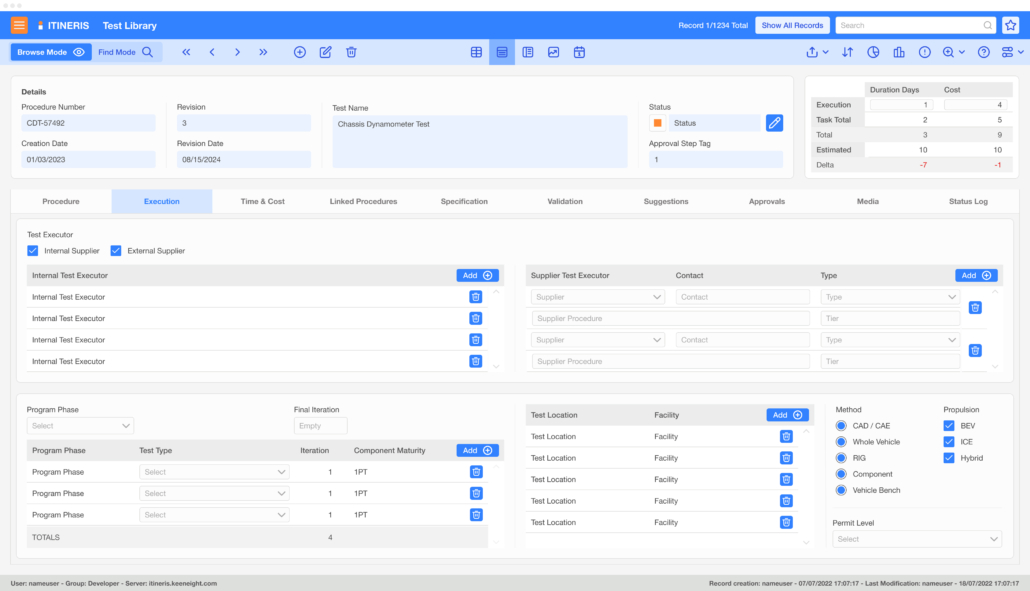
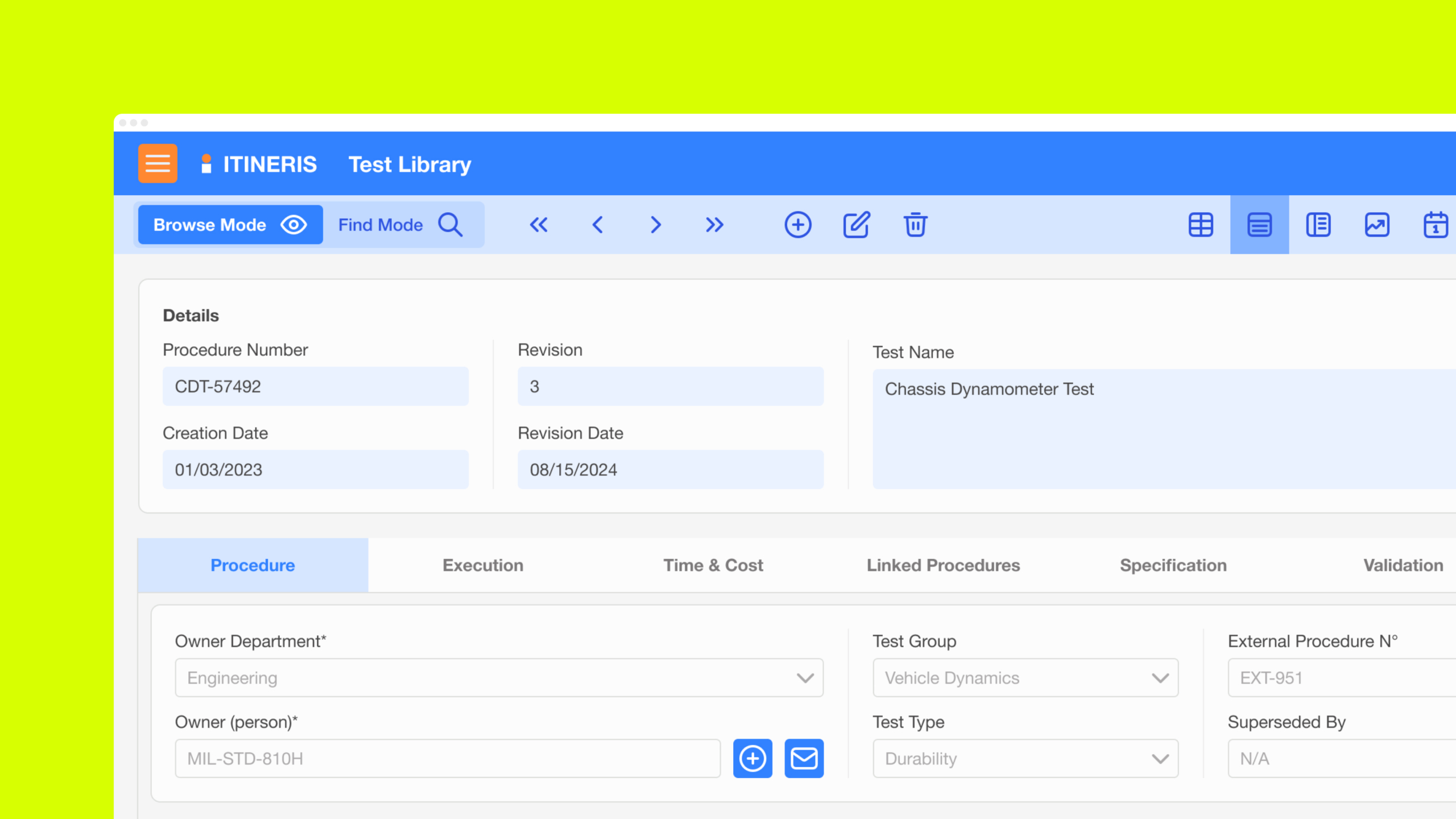
The Test Procedures module in Itineris serves as the authoritative repository for all tests conducted within the company, providing a standardized framework for test management across projects. By centralizing critical test information, this module ensures consistency, accountability, and efficiency throughout the testing process. The Test Procedures module is a cornerstone of the Itineris ecosystem, offering a comprehensive platform to manage, plan, and execute tests efficiently. By integrating with other modules and providing a centralized framework for all testing activities, it ensures that projects meet their quality, performance, and compliance goals.
Key Features
1. Centralized Repository:
- All tests, regardless of project or purpose, are documented and stored in a single location, making it easy to access, manage, and reference testing data.
- The repository supports both high-level tests and detailed breakdowns into specific test cases, offering flexibility to suit various project needs.
2. Clear Ownership and Accountability:
- Each test is assigned an owner, ensuring clear responsibility for its execution and outcomes.
- Roles and responsibilities are explicitly defined, covering aspects such as test planning, execution, and validation.
3. Detailed Test Information:
- The module consolidates essential data for each test, including:
- Iterations per Phase: Defines the number of repetitions required in each development phase.
- Sign-Off Iterations: Specifies the iterations necessary for final validation and approval.
- Test Locations: Identifies where the tests will be conducted, whether on-site, in laboratories, or at external facilities.
4. Detailed Test Information:
- Pre- and Post-Execution Tasks: Documents activities required before and after test execution, such as setup, calibration, teardown, and data analysis.
- Cost Forecasts: Provides detailed cost estimates for each test, aiding in budget planning and resource allocation.
5. Dependency and Test Case Management:
- Tests can be linked to create dependencies, illustrating how one test impacts or supports others.
- Large tests can be broken down into smaller test cases, offering a modular approach to planning and execution.
6. Integration with DVP:
- The Test Procedures module integrates seamlessly with the Design Verification Plan (DVP), ensuring that all tests align with project objectives and validation requirements.
- This integration helps track test progress, monitor milestones, and ensure comprehensive coverage of all design attributes.

Benefits
- Consistency Across Projects: Standardizes test documentation and processes, ensuring uniformity across different teams and projects.
- Enhanced Traceability: Maintains a clear audit trail of all tests, including their objectives, execution details, and outcomes, supporting compliance and quality assurance.
- Improved Planning and Efficiency: Centralized data and clear dependencies enable better scheduling, resource allocation, and overall test management.
- Actionable Insights: Consolidated test data, including cost forecasts and execution details, provide managers with the information needed to optimize testing strategies and budgets.
- Supports various testing scenarios, from simple validation to complex system tests, adaptable to all project sizes.