
Marketing Fleet
The Marketing Fleet module in Itineris is a comprehensive solution for managing vehicles owned and operated by the Marketing department. It not only tracks the technical and operational details of these vehicles but also places a strong emphasis on financial oversight, ensuring that all aspects of fleet management are transparent, cost-effective, and compliant with organizational policies.
The Marketing Fleet module in Itineris offers a holistic approach to managing marketing vehicles, balancing operational efficiency with financial oversight. Its integration with other modules, real-time tracking, and detailed reporting capabilities ensure that vehicles are utilized effectively, costs are controlled, and compliance is maintained across all activities.
Key Features
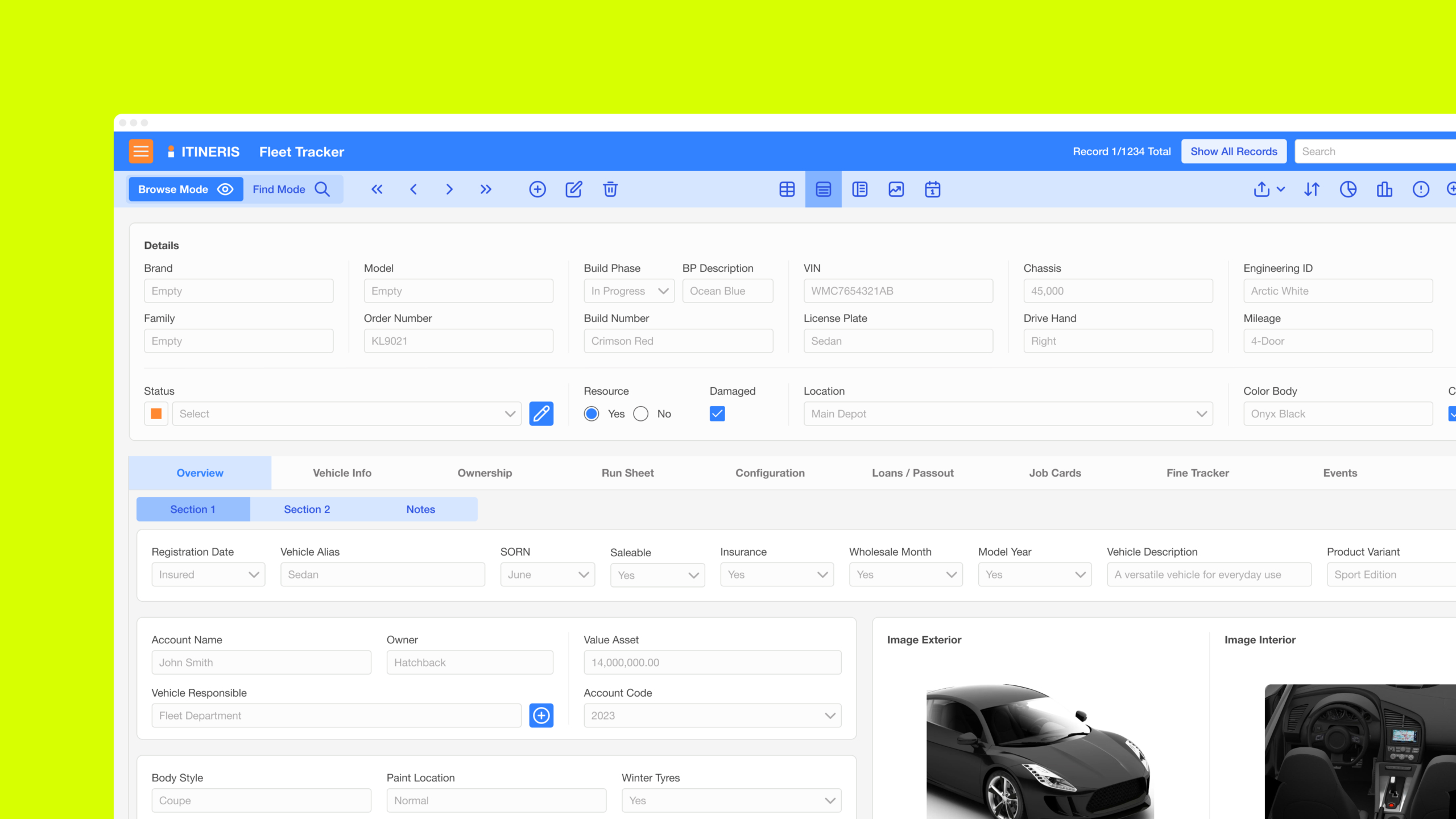
1. Vehicle Parameter and Configuration Tracking:
- Logs detailed information for each vehicle, including:
- Make, model, and year.
- Custom configurations or modifications for marketing purposes.
- Vehicle identification numbers (VINs) and license details.
- Current mileage, usage history, and condition.
- Ensures all technical and operational data are readily available for reporting or audits.
2. Financial Oversight:
- Tracks financial details for each vehicle, including:
- Ownership Costs: Records initial purchase prices, maintenance expenses, and insurance costs.
- Depreciation: Logs vehicle depreciation over time, providing accurate financial insights for budgeting and asset valuation.
- Operational Costs: Monitors expenses related to fuel, servicing, and usage.
3. Vehicle Loan Management:
- Facilitates the loaning of vehicles to third parties, such as external marketing agencies, media representatives, or event organizers.
- Tracks all required documentation, such as contracts, liability waivers, and insurance policies, ensuring compliance and reducing legal risks.
4. Integration with Pass-Out Module:
- Links with the Pass-Out module to monitor fleet movements.
- Ensures vehicles leaving or entering the facility are logged, with all necessary approvals in place.
- Tracks who is responsible for the vehicle and its destination during external use.

Benefits
1. Improved Financial Management: Provides a detailed view of costs, ensuring better control over the marketing fleet’s financial performance. Helps identify cost-saving opportunities by analyzing operational and maintenance expenses.
2. Enhanced Compliance: Ensures all necessary paperwork and approvals are in place for vehicle loans or external use. Maintains a clear audit trail for financial transactions and fleet activities.
3. Streamlined Operations: Centralizes vehicle data and processes, making fleet management more efficient and less prone to errors.
4. Maximized Fleet Utilization: Tracks vehicle availability and usage patterns, ensuring optimal allocation of resources.
5. Proactive Maintenance Management: Tracks vehicle conditions and schedules maintenance proactively, reducing downtime and extending the fleet’s lifespan.
6. Accountability and Transparency: Clearly defines vehicle ownership, usage responsibilities, and associated costs, improving accountability across teams.
Applications
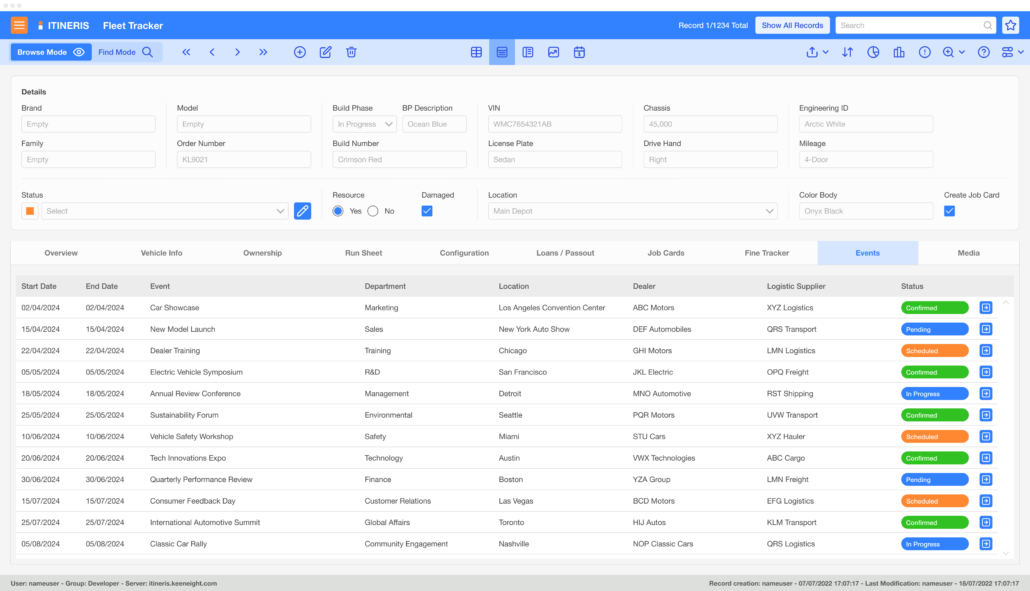
- Marketing Campaigns: Manages vehicles used in promotional events, media drives, or roadshows.
- Third-Party Loans: Ensures smooth handling of vehicle loans to external parties while maintaining compliance and traceability.
- Financial Analysis: Supports budgeting and asset management by providing detailed financial insights into the fleet.
Example Scenario:
The Marketing department uses the Marketing Fleet module to manage vehicles for a regional promotional event:
- Vehicle details, such as configurations and branding modifications, are logged in the system.
- Two vehicles are loaned to a media agency, with contracts and insurance documents uploaded for compliance.
- The Pass-Out module logs the vehicles’ exit from the facility and monitors their return date.
- During the event, operational costs like fuel and mileage are tracked in real-time.
- At the end of the quarter, a financial report highlights the total cost of the event fleet, vehicle depreciation, and projected maintenance needs, informing future planning and budgeting.


