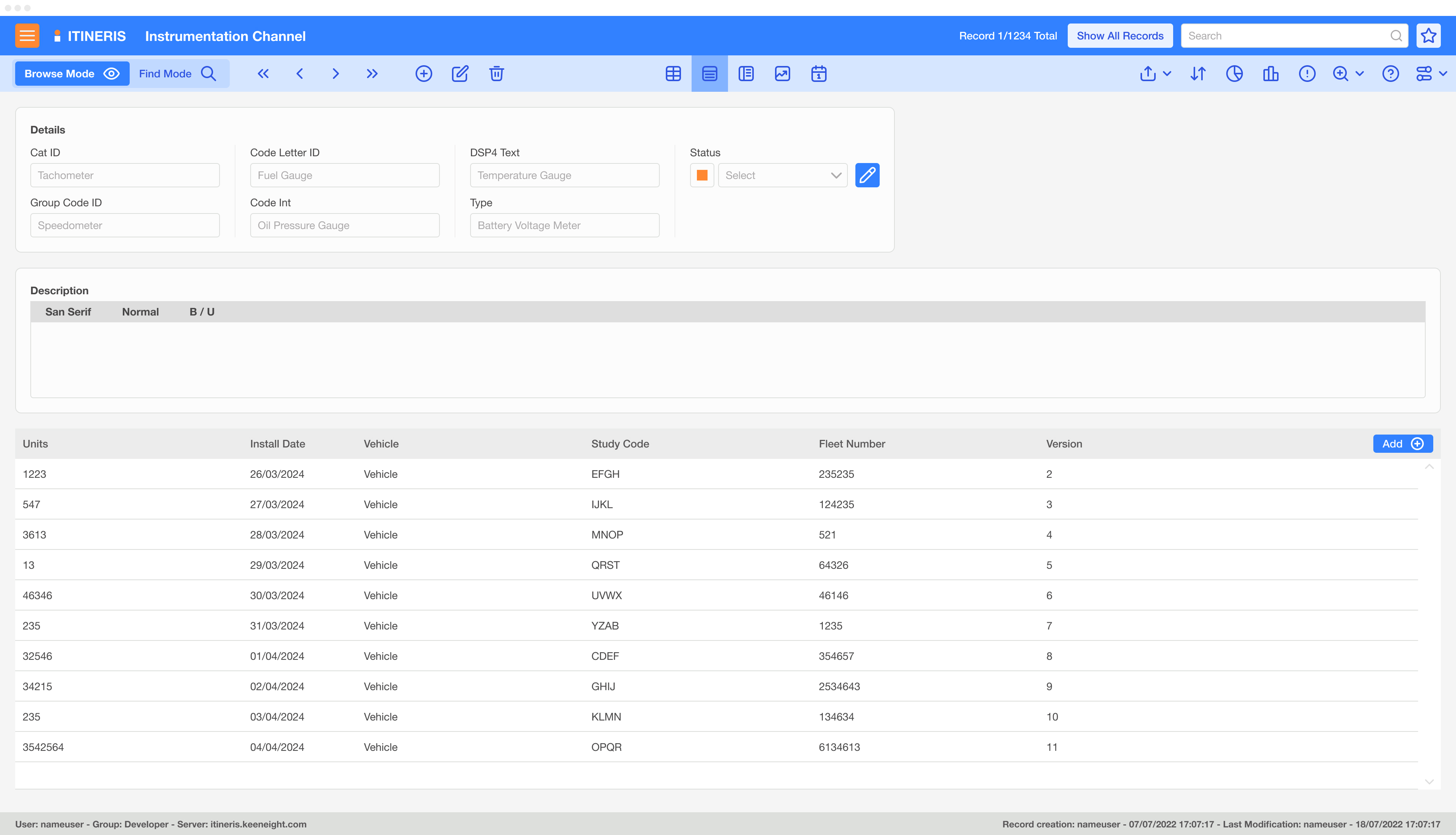
Instrumentation
The Instrumentation module in Itineris is a versatile and powerful tool for managing the data loggers, analysis equipment, and other testing resources critical to automotive development. By providing centralized oversight of instrumentation, it ensures precise data collection, seamless integration with testing workflows, and efficient allocation of equipment across projects.
The Itineris Instrumentation module is a vital component of the automotive development process, providing centralized control and oversight of all testing equipment. Its integration with other modules, combined with robust traceability and compliance features, ensures that testing activities are executed with precision and efficiency, supporting high-quality outcomes and streamlined operations.
Key Features
1. Comprehensive Inventory Management:
- Maintains a detailed inventory of all testing equipment, including data loggers, sensors, and analysis tools.
- Tracks essential information such as:
- Calibration Details: Ensures all instruments are properly calibrated for accurate measurements.
- Channel Requirements: Documents the input/output channel configurations needed for each test.
- Availability Status: Provides real-time updates on whether equipment is in use, available, or undergoing maintenance.
2. Booking and Allocation:
- Facilitates the booking of instrumentation for specific tests, providing visibility into scheduling and resource availability.
- Prevents double-booking and ensures the right equipment is assigned to the appropriate test or project.
3. Seamless Installation and Removal:
- Links with the Job Cards module to coordinate the installation and removal of equipment on vehicles or test setups.
- Ensures that instrumentation is handled systematically, reducing errors and minimizing downtime.
4. Integration with Itineris Modules:
- Run Sheets Integration: Links equipment usage to specific tests, creating a comprehensive record of testing activities.
- Test Procedures Integration: Aligns instrumentation with predefined test plans, ensuring all required tools are in place before testing begins.
- Issue Tracker Integration: Logs issues related to instrumentation performance, ensuring prompt resolution and avoiding disruptions.
5. Traceability and Compliance:
- Maintains a detailed record of equipment usage, including the tests conducted, conditions applied, and results obtained.
- Supports compliance with quality standards and regulatory requirements by providing auditable data on instrumentation performance and history.
6. Data Accuracy and Quality Assurance:
- Ensures that only calibrated and compliant equipment is used, reducing the risk of data inaccuracies during testing.
7. Customizable Reporting and Dashboards:
- Generates reports on instrumentation usage, availability, and maintenance schedules.
- • Dashboards provide visual insights into equipment allocation, usage trends, and upcoming calibration needs.

Benefits
- Enhanced Resource Management: Centralized inventory and booking reduce conflicts and ensure optimal utilization of testing resources.
- Improved Testing Efficiency: Seamless integration with other Itineris modules ensures that instrumentation is ready and available when needed, minimizing delays.
- Data Reliability: Properly calibrated and assigned equipment ensures high-quality data collection, supporting accurate analysis and decision-making.
- Reduced Downtime: Proactive maintenance and calibration tracking minimize equipment failures and interruptions.
- Regulatory and Quality Compliance: Detailed records and traceability support compliance with industry standards and facilitate quality audits.
- Cost Optimization: Efficient scheduling and utilization reduce unnecessary purchases and optimize resource allocation.
Applications
- Vehicle Testing: Manages the sensors and data loggers required for performance, safety, and environmental tests.
- Component Validation: Tracks instrumentation used in validating individual parts or subsystems.
- Prototype Development: Ensures that appropriate analysis tools are available for early-stage testing.
- Regulatory Compliance Testing: Maintains records of instrumentation for tests required by regulatory bodies.
Example Scenario:
During the development of a hybrid vehicle, the Instrumentation module is used to manage equipment for testing powertrain efficiency:
- The module identifies the available data loggers and sensors required to monitor fuel consumption, electric motor output, and emissions.
- These instruments are booked and assigned to the testing team, with installation coordinated through the Job Cards module.
- During testing, data from the equipment is linked to the Run Sheets module, ensuring comprehensive documentation of test parameters and results.
- Calibration records are automatically checked to ensure all instruments are compliant and accurate before testing begins.
- After the test, a detailed report is generated, summarizing equipment performance and any identified issues, which are logged in the Issue Tracker for follow-up.